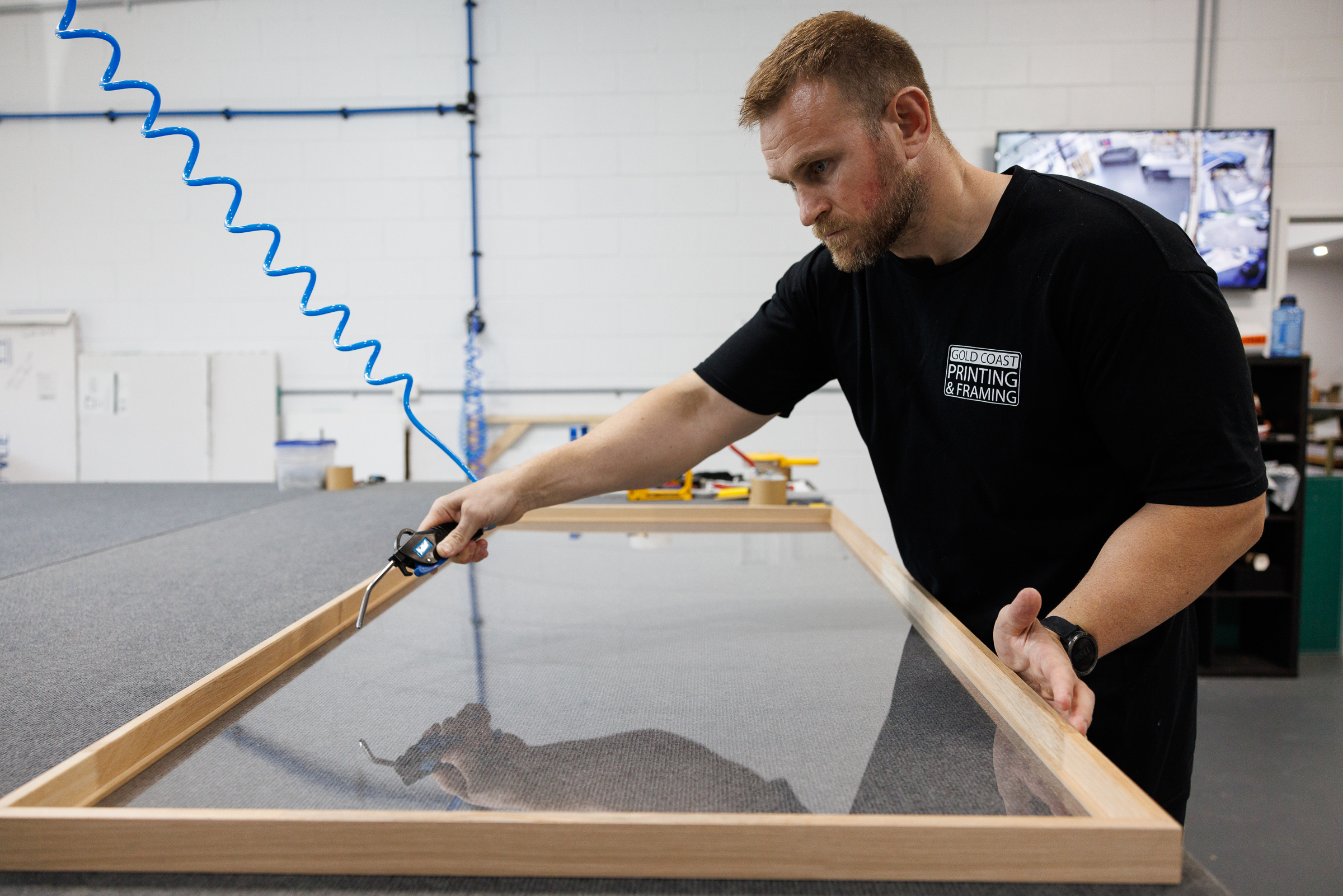
If you’re framing something you actually want to keep – an original artwork, a family photograph, a signed jersey – you want it to still look right in twenty years, not yellowed at the edges or faded behind the glass. Archival framing is the answer to that problem.
It’s a way of framing that uses different materials and methods than the standard framing you’ll find at a big-box store, chosen specifically to protect what’s inside the frame rather than just display it nicely today.
This guide breaks down what’s actually involved, what it protects against, and how to tell whether it’s worth choosing for your own piece.
What Is Archival Framing, Exactly?
Archival framing (also called conservation framing, preservation framing or museum framing) is framing designed around long-term protection rather than short-term presentation.
It uses acid-free materials, UV-filtering glazing and mounting methods that can be reversed, so nothing inside the frame damages the piece over time, and the piece can be safely removed later if it ever needs conservation work, cleaning or reframing.
The four names are used fairly interchangeably across the framing industry. Some framers reserve “museum grade” specifically for their top tier of materials, but the underlying goal is the same across all of them: keep the piece looking the way it does today, for as long as possible.
What Goes Into an Archival Frame
Acid-free, pH-neutral mats and backing. These don’t release the acids that cause yellowing and brittleness, which matters because the mat and backing sit in direct contact with the piece for the life of the frame.
UV-filtering glazing. Standard glass blocks very little ultraviolet light. Archival and museum-grade glazing filters most of it out, slowing the fading that UV causes in photographs, prints, textiles and painted surfaces.
Reversible mounting. Instead of gluing or taping a piece directly to its backing, archival framing uses methods that can be undone without damage, such as photo corners or archival hinging. If the piece ever needs to come out for cleaning, restoration or reframing, it can, without tearing or losing value.
Sealed, inert backing. A properly sealed back keeps dust and pollutants out and creates a stable micro-environment inside the frame, rather than leaving the piece exposed to whatever’s in the air of the room it hangs in.
What Actually Damages Framed Artwork
Framing damage is usually slow and invisible until it’s permanent, which is exactly why it’s easy to overlook until the harm is already done. The main causes are:
- UV light, which fades photographs, watercolours, dyes and inks, and accelerates the breakdown of paper fibres.
- Acidic materials, particularly wood-pulp mat board and backing, which release acids into whatever they’re touching and cause yellowing and brittleness over time.
- Humidity and moisture, which can warp paper, canvas and timber, and encourage mould in damp conditions.
- Direct contact and poor mounting, such as artwork glued or taped straight onto a backing board, can tear or stain the piece the moment anyone tries to remove it.
- Even darkness plays a part. Photographs in particular can discolour in storage, not just on the wall, since some of the chemical processes that affect a print continue regardless of light exposure.
None of this is a reason to panic about anything already on your wall. It’s the reason archival framing exists for the pieces where the outcome actually matters to you.
Archival Framing vs Standard Framing
Standard framing | Archival framing | |
Mat and backing | General-purpose, can turn acidic over time | Acid-free, pH-neutral |
Glazing | Regular glass or acrylic, little UV protection | UV-filtering, up to museum-grade |
Mounting | Often glued or taped directly to the backing | Reversible (hinges, corners) |
Best suited to | Everyday prints, posters, decor you’ll replace | Original art, photography, memorabilia, keepsakes |
Do You Need Archival Framing?
Not everything needs it. A print or poster you’re happy to replace in a few years won’t lose much going into standard framing.
Archival framing earns its keep on the pieces you actually want to last: original artwork and fine art or giclée prints, professional photography, canvas pieces you intend to keep long-term, and anything with real sentimental or collectible value, including sports jerseys and memorabilia and other framed keepsakes.
If you’re not sure which category your piece falls into, that’s exactly what a framing consultation is for.
How We Approach Archival Framing at GC Printing & Framing
We bring printing and framing together under one roof at our Burleigh Heads studio, with over 20 years of experience in custom framing behind it.
Our custom framing uses acid-free, archival-grade mats and backing as standard, with a full range of glazing options, from standard clear glass through to non-reflective, UV-protective and museum-grade glass, so the level of protection can be matched to what the piece is actually worth to you.
If printing is part of the job too, our fine art and giclée prints are produced in-house using archival pigment inks and fine art papers.
Ready to protect something that matters? Book a free consultation at our Burleigh Heads showroom, or bring your piece in and we’ll talk you through the right archival options for it.
Frequently Asked Questions
Is archival framing expensive?
It generally costs more than basic framing, because the materials involved cost more to begin with. It doesn’t have to be the priciest option in the shop, though. The right level of protection depends on what the piece is worth to you, and a consultation will get you a clear quote before anything is decided.
Is archival framing the same as museum framing or conservation framing?
Largely, yes. The terms are used fairly interchangeably across the industry, though some framers use “museum grade” specifically for their top tier of materials.
Can I upgrade an existing frame to archival standard?
Often, yes. Reframing a piece currently in standard framing is one of the more common requests we see, especially once someone notices fading or yellowing starting to show. Bring it in and we can assess what’s worth salvaging and what a reframe would involve.
How long does archival framing last?
There’s no single figure that applies to every piece, since it depends on the materials used and where the frame hangs (direct sunlight works against any glazing, however good).
What’s true in general is that properly executed archival framing is designed to protect a piece for decades, well beyond what standard framing materials can offer.