Memorabilia is rarely just “stuff”. It can be a signed jersey, a medal, a ticket, a photo or a keepsake that marks a moment worth remembering.
The way you display it matters because the wrong setup can expose your piece to sunlight, dust, moisture, pressure marks or poor mounting. Over time, that can damage its condition and reduce its impact on the wall.
A good display does more than fill a space. It protects the item, gives it presence and makes the story easy to see.
Some pieces suit a standard frame. Others need a shadow box, shelf, or custom layout. The right choice depends on the item’s depth, material, value and where it will be displayed.
This guide explains how to display memorabilia properly, which methods suit different items, and what to avoid if you want your collection to last.
Why The Right Memorabilia Display Matters
Choosing the right memorabilia display protects the item and the memory attached to it.
A signed jersey, framed photo or old ticket may look fine today, but poor display choices can cause damage slowly. Direct sunlight can fade fabric, paper and signatures. Cheap backing can stain or weaken delicate materials. Tape, glue and pins can leave marks that are hard to reverse.
Even the layout matters. If a piece is crowded, poorly mounted or placed in the wrong frame, it can look less valuable than it really is.
A well-planned display gives the item support, spacing and protection. It also makes the piece feel intentional, whether it is hanging in a home, office, clubroom or business.
That is why the best display is not always the quickest option. It is the option that suits the item, protects its condition and presents it with the care it deserves.
Start With The Item, Not The Frame
Before choosing between a frame, shelf or cabinet, look closely at the item itself. The right display method depends on what you are working with.
A flat photo needs a different approach to a signed jersey. A medal has different requirements to a concert ticket. A bulky collectable may need depth, while a delicate paper item may need support and UV protection.
Start with these questions:
- Is the item flat, folded, bulky or fragile?
- Is it signed or likely to fade?
- Is it made from paper, fabric, metal, plastic or mixed materials?
- Does it need to be viewed from the front only, or from multiple angles?
- Will it be displayed in a bright room, hallway, office or public space?
- Is it sentimental, valuable or hard to replace?
These questions help narrow the choice. A standard frame may work well for a certificate or signed photo. A shadow box may suit a jersey, medals or layered keepsakes. A display shelf or cabinet may suit larger items like trophies, helmets or collectables with more shape.
Once the display method matches the item, the final result looks better and lasts longer.
Framing Flat Memorabilia
Framing is a strong choice for flat or lightly layered memorabilia. It gives the piece structure, keeps it secure and makes it easier to display with a clean finish.
This approach works well for:
- Signed photos
- Certificates
- Tickets
- Posters
- Newspaper clippings
- Postcards
- Art prints
- Paper keepsakes
These items are easy to damage when they are stored loose, handled often or placed in cheap frames. Paper can bend, crease, fade or mark if it is not supported properly.
The right frame helps protect the piece while giving it a finished look. Matboards can create breathing room around the item. Quality backing can help support it. UV-protective glass or acrylic can reduce fading from light exposure.
Framed memorabilia also suits spaces where presentation matters. A signed photo in a home office, a certificate in a reception area or a concert ticket in a gallery wall all look more considered when the framing is done properly.
The goal is simple: keep the item secure, visible and protected without taking attention away from the memory itself.
Using Shadow Boxes For Jerseys And 3D Memorabilia
Some memorabilia needs more depth than a standard frame can provide.
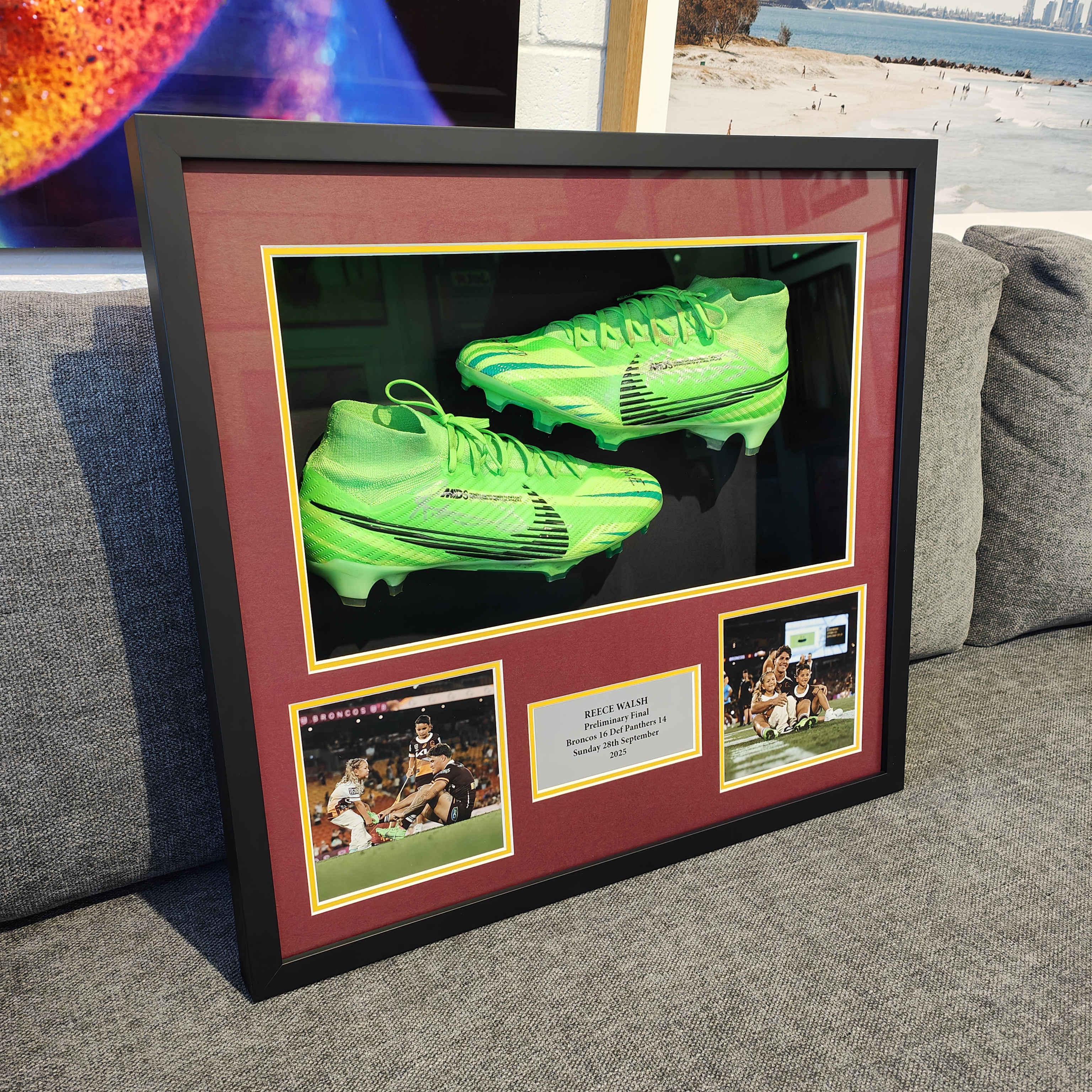
Jerseys, shirts, medals, shoes, and other 3D keepsakes often need a shadow box. This gives the item space inside the frame, so it does not sit hard against the glass or become crushed.
That space matters when fabric can crease under pressure, signatures can rub or fade, and medals and raised objects can shift if they are not mounted properly.
A shadow box allows the item to be supported without forcing it flat. It also gives the display more presence, which is why this style works so well for signed sports jerseys, team shirts and milestone keepsakes.
The layout is just as important as the depth. A jersey may need to be folded in a way that shows the name, number or signature clearly. Medals may need to sit evenly beside a photo or plaque. Smaller items need enough spacing so the display does not feel cluttered.
When done well, a shadow box turns memorabilia into a feature piece. It protects the item, keeps the layout clean and makes the story easy to understand at a glance.
Displaying Mixed Memorabilia Together
Some pieces make more sense together than on their own.
A jersey, ticket, photo and plaque can tell the full story of a match. A medal, race bib and event photo can mark an achievement. A concert ticket, signed poster and photo can capture a night that meant something.
This is where a custom layout can make a big difference.
Mixed memorabilia needs balance. Each piece should have a clear role. The main item should lead the display, while the smaller pieces support the story around it.
For example, a jersey may be the hero piece. Then adding a photo may show the moment. A ticket may give the date and place. A plaque may explain why the item matters.
Spacing is important. If everything is packed tightly, the display can feel messy. If the layout has too much empty space, the pieces can feel disconnected.
A good mixed display brings everything together without making it look crowded. It gives the collection a clear structure and turns separate keepsakes into one finished piece.
When Shelves Or Cabinets Make More Sense
Not every piece needs to be framed.
Display shelves and cabinets can work well for larger or bulkier memorabilia, especially items that are better viewed in the round. Trophies, helmets, figurines, sculptural collectables and larger objects often suit this type of display.
This option can also work when the collection changes often. If you like rotating items, adding new pieces or keeping some objects accessible, a shelf or cabinet may be more practical than a permanent frame.
But open display has trade-offs.
Shelves collect dust. Cabinets can still expose items to light. Larger collections can start to feel crowded if there is no clear order. A valuable item can also look less impressive if it is placed among too many competing objects.
If you use shelves or cabinets, give each piece enough space. Group items by type, theme, colour or event. Keep the most important pieces at eye level, and avoid placing delicate items in direct sunlight or high-humidity areas.
For valuable, signed or fragile items, a framed or enclosed display will give you better long-term protection.
How To Protect Memorabilia From Damage
Protection should guide every display choice.
Light is one of the biggest risks. Direct sunlight can fade paper, fabric, photographs and signatures. Even a piece that looks safe near a window can lose colour over time.
Moisture is another issue. Humidity can affect paper, fabric and backing materials. Bathrooms, kitchens, garages and damp storage areas are usually poor choices for memorabilia.
Mounting also matters. Tape, glue and pins may seem convenient, but they can stain, tear, crease or weaken delicate items. This is especially risky for signed pieces, old paper, fabric and anything with sentimental or financial value.
Better protection usually comes from better materials and better mounting. Useful options include:
- Acid-free matboards and backing
- UV-protective glass or acrylic
- Non-invasive mounting methods
- Proper spacing between the item and glazing
- Strong backing and secure hanging hardware
- Display locations away from direct sun and moisture
The aim is not to seal the item away forever. The aim is to display it in a way that lets you enjoy it without exposing it to unnecessary damage.
Common Memorabilia Display Mistakes To Avoid
Most display damage comes from simple choices that seem harmless at the time.
- Direct sunlight: Placing memorabilia in a bright spot may look appealing, but light can fade signatures, photos, posters and fabric over time.
- Cheap frames or backing: Low-quality materials can discolour, warp or fail, affecting both the appearance and condition of the item.
- Poor mounting methods: Pins, tape and glue can leave permanent marks and make the item harder to reframe later.
- Overcrowding: Too many items in one frame, cabinet or shelf can make the display look busy and cause items to rub, shift or lose visual impact.
- Choosing the wrong display method: A frame, shadow box, shelf or cabinet can all work, but only when the method suits the item.
When you avoid these mistakes, your memorabilia looks better, lasts longer and feels more worthy of display.
What To Do If You Are Not Sure How To Display Your Piece
If you are unsure how to display memorabilia, start by thinking about what matters most: protection, presentation or flexibility.
If the item is signed, delicate or hard to replace, protection should come first. If it is going in a living room, office or public space, presentation may matter just as much. If the collection changes often, a shelf or cabinet may be more practical.
The safest option is to get advice before you commit to a frame or layout.
At GC Printing & Framing, our experienced team helps Gold Coast customers choose display methods for memorabilia, jerseys, photographs, certificates, keepsakes and mixed collections. That includes advice on frame depth, layout, matboards, backing, glazing and the overall finish.
This is especially helpful when the item has unusual dimensions, multiple pieces or sentimental value. Instead of guessing, you can compare options and choose a display that suits the item, the room and the story behind it.
Professional Framing Makes The Difference
If a piece of memorabilia means something to you, it is worth doing it properly.
Professional framing is not just about making something look good on the wall. It is about protecting the item, preserving its condition and presenting it in a way that reflects its value. Cheap frames, poor materials and quick fixes can lead to fading, damage or a display that does not do the piece justice.
A professional framer considers the details that matter. That includes the right materials, proper mounting, suitable depth, balanced layout and protection from light and environmental damage. Whether it is a signed jersey, a photo, a certificate or a mixed collection, the goal is to create a display that lasts.
GC Printing & Framing offers custom memorabilia framing from its Burleigh Heads showroom, with options for framed pieces, shadow boxes, mixed layouts and protective materials. If you want help getting it right, bring your piece in or speak with the team.
Schedule a free consultation and create a display that is built to last.